Traffic Separating Device (Johan Palmgren, 2018)

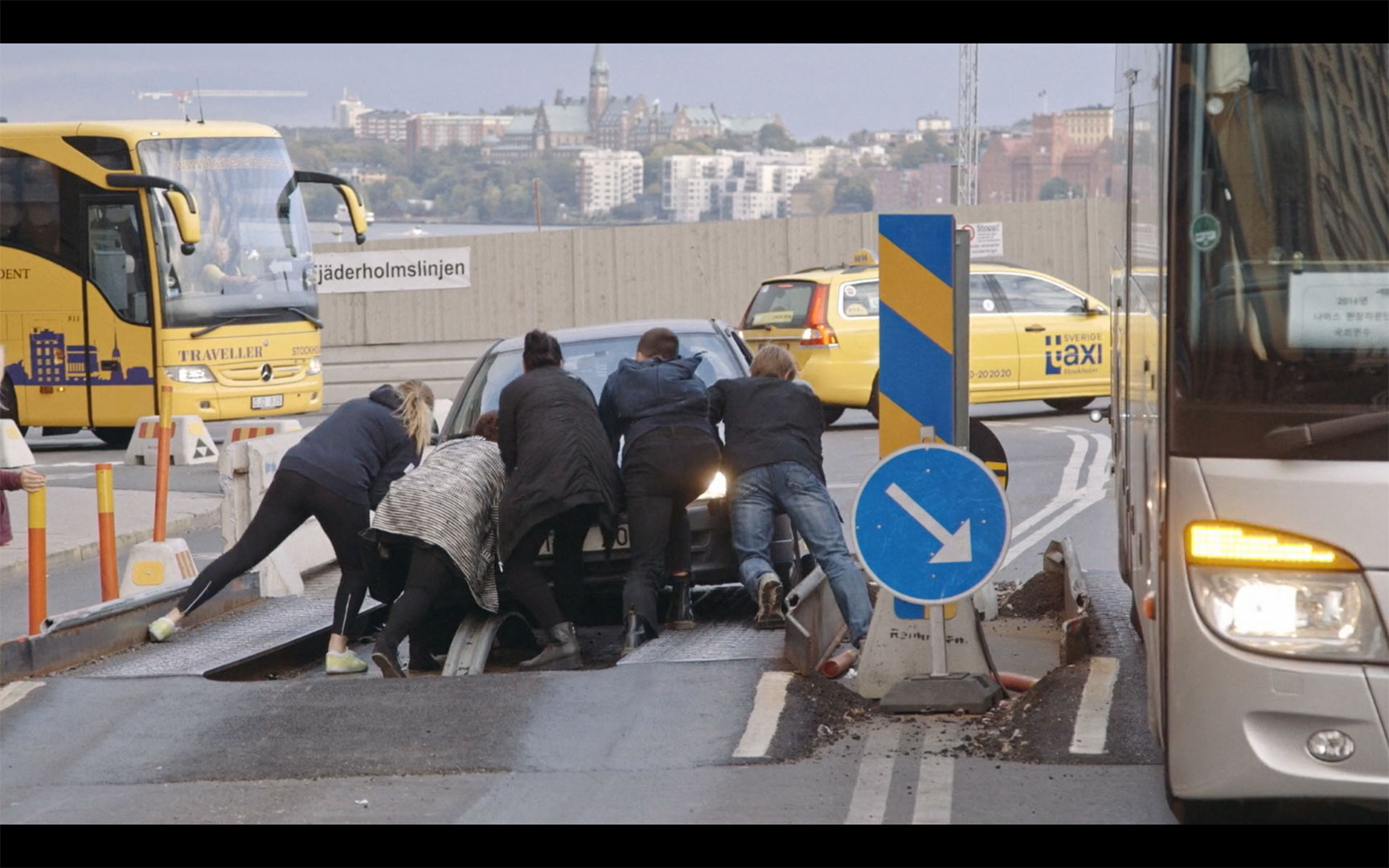
This short and quirky documentary (14 min.) captures what happens on a busy Stockholm street when the City Council votes to install a “spår-vidds-hinder” (a new-fangled device embedded in the middle of the road to allow buses, but not cars, to use a specific lane — or, as described more accurately by one of the locals, a “car trap”).

Along the way, there are more than a few flat tires and broken axles — and one missed ferry-ride leading (sadly) to an aborted birthday party. It’s humorous and light, but planners will recognize and identify with real world challenges presented as a well-intentioned traffic solution goes horribly off-road. In the end, the experiment delivers an important lesson: even the simplest urban planning interventions need to account for “the human factor.” (Or, in the words of one of bemused on-lookers, “It’s bloody hilarious. There are idiots, and then there are idiots.”) Notes to self: nobody ever reads signs, everyone assumes that the rules don’t apply to them, and people trust their GPS more than their own eyes.

Streaming online via PBS.

(please share! all is takes is one quick click...)

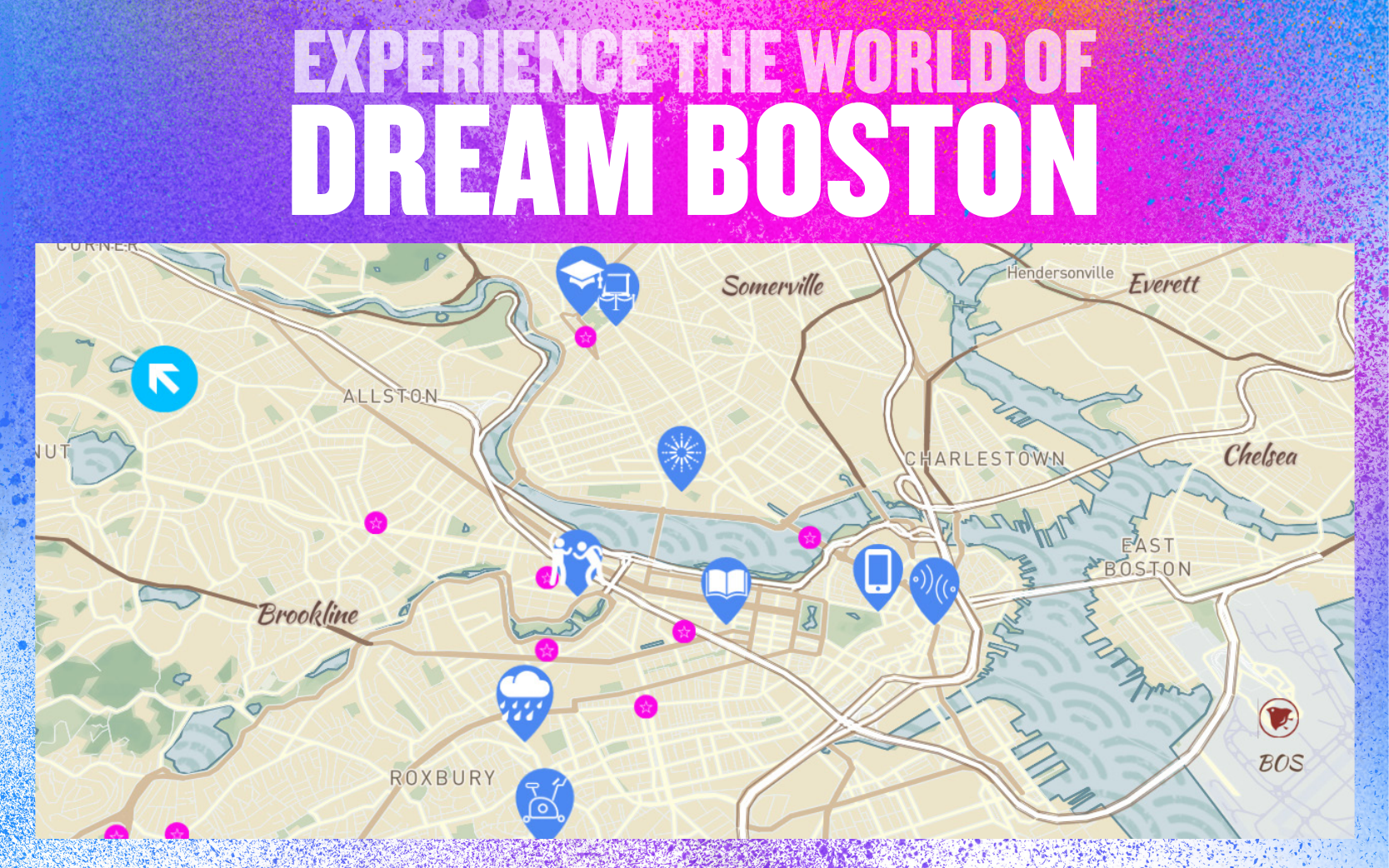
“Dream Boston” audio-plays reviewed on ArtsFuse

My recent review of episodes 1–5 of “Dream Boston,” produced by the Huntington Theatre, is now live on ArtsFuse.

Beyond charting these interconnected landscapes of time, history, memory, and the future, the plays all embrace very real landscapes: freed from the confines of the physical theater and the need for expensive sets (and perhaps eager to remember the joy of visiting so many parts of our city, while we shelter in place), each piece is explicitly located in a unique part of Boston, somewhere special to the playwright and the characters. And thus, in each drama, there is a hidden character: our city….

Read the full review at ArtsFuse, and listen to the series free online at The Huntington Theatre.

(please share! all is takes is one quick click...)

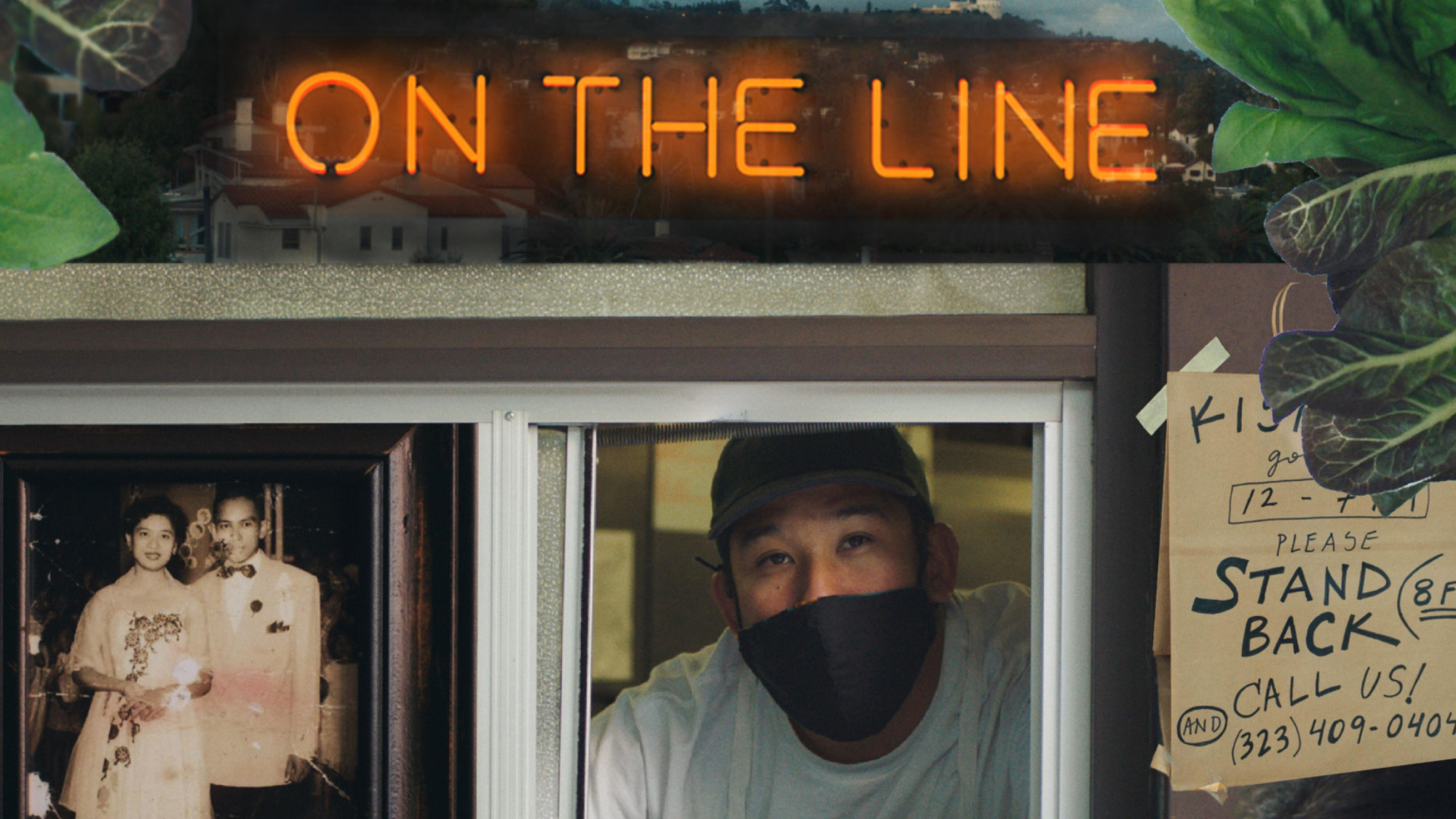
On the Line (2020)

Through a special partnership with Resy, the online dining reservation site, the LA-based media studio Crimes of Curiosity produced a series of short documentary films exploring how their city’s small restaurants have been affected by — and adapted to — the recent COVID-19 crisis.

Each of the four films follows a similar narrative: after first meeting the quirky and endearing personalities behind each business, the pandemic hits and the public health “safer at home” order comes down, and we are confronted with the existential economic threat that the shutdown represents to a small neighborhood business. But after these initial two minutes, the narrative becomes more upbeat, as we learn about the creative and inspiring ways these small entrepreneurs adjust, learning to respond and to reshape their workflows and markets in real time.

While not downplaying the very real economic effects of this crisis, the stories are uplifting, both individually and as a group: across the city, in very different neighborhoods, small businesses and neighbors are helping each other and extending a sense of generosity to support their employees, their communities, and the health-care and essential workers of the city; motivated by both necessity and a desire to do more, small restaurants are nimbly reinventing their core business models; people are helping people, and humanity — despite the many setbacks — is responding to fear, loss, and danger with an abundance of life, love, art, caring, and resilience (and, of course, delicious food…!).

You can watch all four films for free online at https://blog.resy.com/2020/08/on-the-line/, where you will also find tips for ways to support these businesses and others as we continue to reel from the effects of the pandemic.

(please share! all is takes is one quick click...)

“Dreaming Under Capitalism” (2017)

Dreaming Under Capitalism (Rêver sous le capitalisme), the thoughtful and experimental new work from Belgian anthropologist-turned-director Sophie Bruneau, explores the effects of late-stage-capitalism on the lives and psyches of the people who inhabit the office-parks and sales-floors of Western Europe.

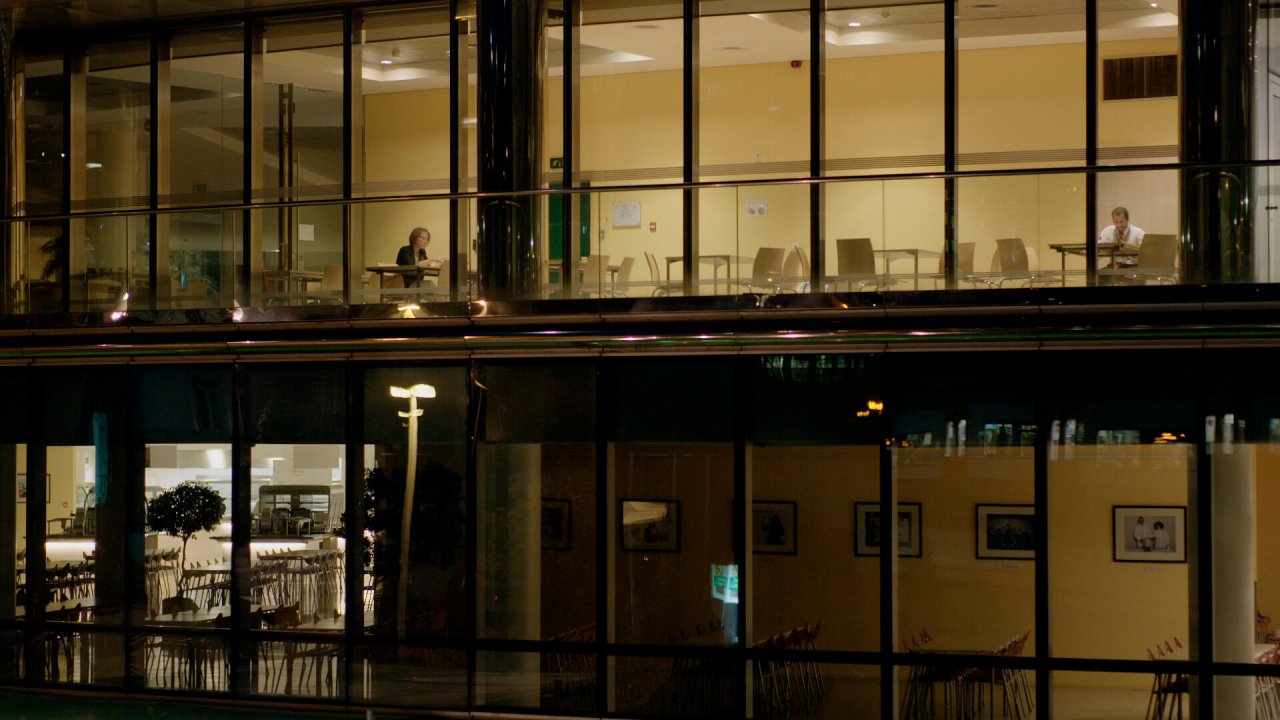
The technique is simple, but elegant, and beautifully executed: by combining voice-over interviews of a dozen ordinary work-a-day employees with haunting-yet-calm footage — still camera, slowly shifting imagery — we are masterfully lulled into the perfect meditative state required to contemplate these lives, and the slight, but incessant, struggle to remain human in the face of numbing and often meaningless bureaucracy. (A single bravura shot — reminiscent of some of Edward Burtynsky’s best work — is worth the price of admission alone: the camera tracks slowly through a seemingly endless corporate cafeteria as we tune in on scraps of small talk and clinking forks.)

dreaming_2.png

The interviews are refreshingly calm and plain-spoken, even when they recount stories of pain, fear, and persistent anxiety. All center around the dreams (or, more often, the anxious nightmares) of these workers: a man is haunted by a fear of being late for work and the the daily judgments and micro-aggressions of an uncaring supervisor; a woman describes feelings of imprisonment, the imagery of a window being boarded up.

Applying a quotation from Marx to the hyper-saturated myth-making power of our media-dominated modern world, Walter Benjamin once noted that “the reform of consciousness consists solely in … the awakening of the world from its dream about itself;” that is: in order to wake from the dream of capitalism, we must wake to the dream of capitalism. Bruneau’s film provides just the alarm-clock we need, with a pleasingly soft-chime to gently nudge us from our slumber.

Throughout, ever-present yet unstated, is the simple but unnerving fact: in the modern world, our jobs and their soul-killing corporate structures have seeped in and infiltrated even unto our private subconscious minds; our dreams are no longer our own, but — just like our time and our bodies — they now belong to the shadow-world of capitalism. Through these brief moments — the frank dialog, the simple, lonely, poignant imagery — Bruneau succeeds at that most important alchemical magic of film: she allows us, the audience, to connect with others, to see their worlds — and our own — with fresh, critical, imaginative eyes. In this, perhaps more powerfully than any political diatribe or slick media propaganda, the film succeeds in the most revolutionary act of all.

(please share! all is takes is one quick click...)

Race, Gender, and the Apocalypse: review of “The World, the Flesh, and the Devil”

The August issue of Planning Magazine is on the streets, including my latest take on the 1959 science fiction classic, The World, the Flesh, and the Devil, starring Harry Belafonte.

After being trapped for days in a coal mine, Ralph Burton (Belafonte) emerges to the aftermath of a radioactive attack. Searching for survivors, he makes his way to New York City. Despite similarities with today’s social isolation — and the prescient foreshadowing of the urban abandonment Belafonte’s real-life generation would soon experience — planners will nonetheless marvel at these images. The city has never looked so empty, so beautiful — or so sterile and dead…

For the full review, see Planning Magazine.

(please share! all is takes is one quick click...)