Following WWII and an agreement hammered out by the victorious Allies in Potsdam in 1945, the city of Berlin was divided, East from West. In 1961, this line was hardened on the landscape and etched into the psyche of the city — and our global consciousness — through the construction of the Berlin Wall, an ominous 12′ high concrete barrier running for over 80 miles through the heart of the city, separating neighbor from neighbor. In 1989, though a cascading series of events as sudden and surprising as those that led to its creation, the Wall suddenly came down.
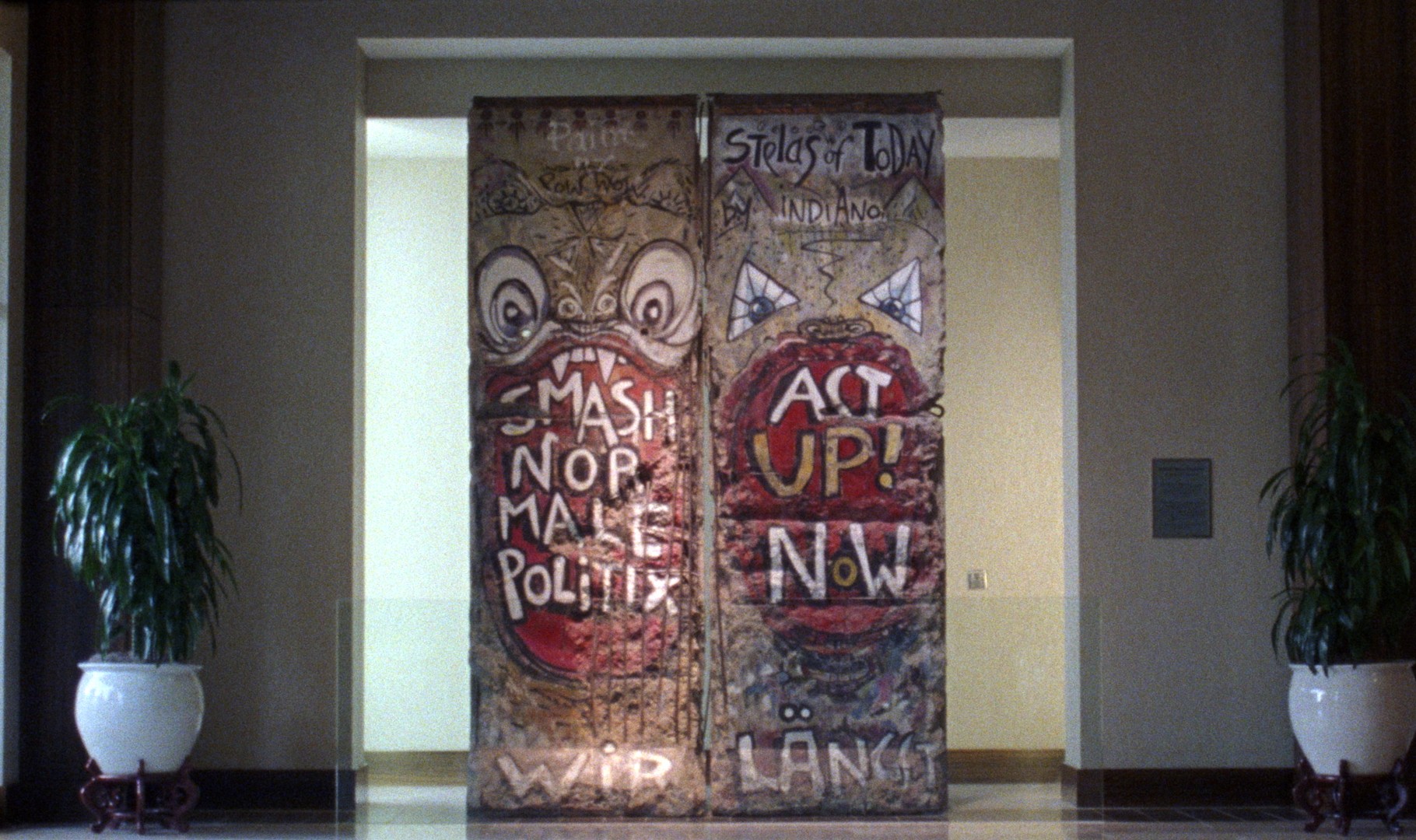
Today, thirty years later, one can still see evidence of this history, permanent monuments to a city divided and a contested world in conflict. In Berlin, to be sure, but elsewhere as well, far beyond Germany or even the European Theater of Operations. Over 75 segments from the Wall have found their way to the U.S., providing the subject for The American Sector, an amusing, quirky, and meditative road-trip/scavenger hunt directed by documentary filmmakers Courtney Stephens and Pacho Velez.
Over a loose 70-minutes, the film wanders across the American landscape in search of these monuments. Some are found in public places — a subway station in Chicago, a university campus, a museum — while others are more remote or trickier to find, installed in private homes or hidden in the wilderness. A surprisingly high percentage are located in Southern California; one is nearly impossible to view, sequestered away in the headquarters of the CIA at Langley, where the camera crew was barred from filming for security reasons. (The situation is played for comic effect, but also provides a solemn opportunity to reflect on questions of power and access, censorship, and historical erasure.)
Along the way, we meet with the keepers of these silent stones, as well as complete strangers who share their thoughts, both deep and banal; more often than not, the wall segments seem to fade into the scenery, as unconcerned passersby simply pass them by: history has become memory, and — as is true about memory in general, while it is always there, we are not always paying attention to it. (Inverting this tendency by gently encouraging us to think about history is one of the key functions of the film.)
The visual imagery of the sequences, like the actual segments of the wall themselves, strikes a charming balance between oppressive and humorous. These looming gray concrete slabs stand impressively, often alone, like some sad Brutalist cousins of Kubrick’s clean visionary monolith from 2001: A Space Odyssey, a disbanded army of concrete soldiers defeated, lost, scattered, alone. And yet there is a lightness to them as well: in part due to the amusing incongruity they present in the landscape, but also thanks to the bright, flashy, and typically irreverent graffiti found on them — or, at least, on the side once facing West Berlin – a classic (and somewhat paradoxical) counter-cultural mix of empathy (for those neighbors trapped by the wall), mockery (of the oppressive government that constructed it), flower-power iconography, and pop-culture consumerism.
The film is a documentary in the purest sense of the word: it finds and documents these fragments of a historical story, collects them, and brings them together in time and space for us to consider on the screen. The filmmakers do not interpret or instruct, and to the extent they do steer our thinking it is with the lightest touch of confident directors: the themes emerge naturally from the material, along with deep, sometimes troubling — but also, as presented, subtle, thought-provoking, and complex — parallels to current debates, far beyond the legacy of the Cold War, including the role of monuments in commemorating (and reinterpreting) history and the conflicted nature of the walls which divide us.
Although you’ll need to work at it a bit, the result is much more than a narrative or didactic work could ever hope: Stephens and Velez have provided an opportunity for calm reflection, and some wonderfully rich material to reflect upon.
The American Sector is currently showing in limited release in the DocYard’s Spring series.
(Note: this review also appeared in The Arts Fuse on 2/15/2021.)