Bicycle Thieves: the Filmerick

My class on “The City in Film” recently screened Vittorio De Sica’s classic BICYCLE THIEVES, and I was inspired to pen another “filmerick”:

BICYCLE THIEVES (Vittorio De Sica, 1948)
De Sica shoots Rome neo-real,
The poor have been dealt a raw deal.
         A bike is required
         Or Ricci gets fired:
All men must eventually steal.

http://agcrump.files.wordpress.com/2012/03/bicycle-thieves-image.jpg

So great, so sad.

(please share! all is takes is one quick click...)

Blow-Up: the Filmerick

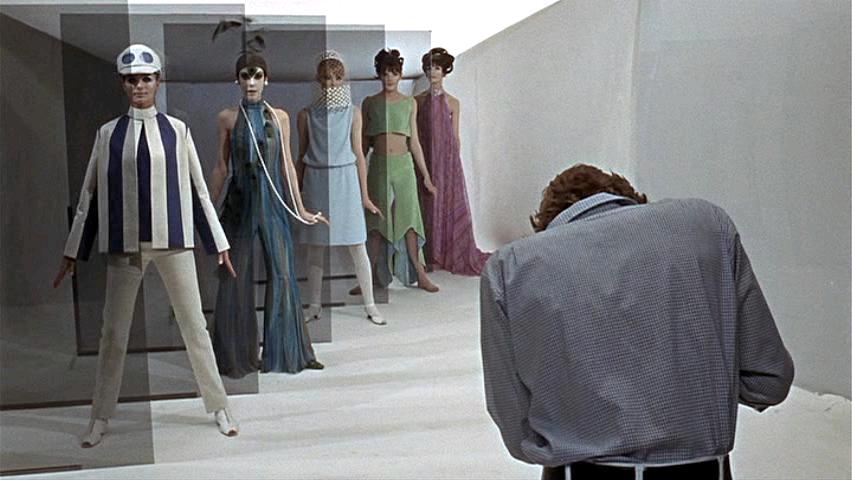
As described previously, I’ve been exploring a new medium, the “filmerick” (limericks to summarize great films). Over the weekend my daughter and I were fortunate to catch a special screening of Blow-Up at the Harvard Film Archive, and here’s what I came up with:

BLOW-UP (Michelangelo Antonioni, 1966)
A portrait of visual glories,
And behavior abhorrent to Tories,
Signor Antonioni,
Has certainly shown he
Can spin some great shaggy-dog stories.

The film itself is great, of course: a wonderful, touchingly sad meander through 1960s London, ushering in what would later be recognized as a golden age of the cinema of urban alienation and the search for meaning amid the chaos of modern life.

I was especially moved by how beautifully Antonioni filmed both the perfectly balanced “design world” (fashion shoots, bohemian artist “live-work space”) and the eclectic clutter of “real London” (crowds and demonstrations, junk shops, construction sites). Both draw you in – part of the mystery implied in every shot – and one leaves the film with an appreciation for the eye’s uncanny ability to frame and capture the art all around us. (Although whether we can every truly grasp and understand what we capture is another story altogether…)

http://1.bp.blogspot.com/-3dKSs_563Zg/TZYF9mxs7kI/AAAAAAAACiI/MREYEctoVWg/s1600/01e_03_009.jpg

(please share! all is takes is one quick click...)

“Filmericks” from my “City in Film” class

This semester I’ve been teaching a new course on “The City in Film” in MIT’s Department of Urban Studies and Planning. As the syllabus describes:

Using film as a lens to explore and interpret various aspects of the urban experience in both the U.S. and abroad, this course presents a survey of important developments in urbanism from 1900 to the present day, including changes in technology, bureaucracy, and industrialization; immigration and national identity; race, class, gender, and economic inequality; politics, conformity, and urban anomie; planning, development, private property, displacement, sprawl, environmental degradation, and suburbanization; and more.

My plan is to vary the films shown in the course from year to year, but to always include a balance of classics from the history of film, an occasional experimental or avant-garde film, and a number of more recent, mainstream movies. This year’s lineup includes the obligatory (and excellent) METROPOLIS, an NYC romp in ON THE TOWN, a touch of photo-realistic noir in THE NAKED CITY, some psycho-geographic dérive in LONDON, and much more — 13 films in all.

To help liven the class up a bit (as if all these great city films isn’t enough!), and also to help us all keep the films straight, I’ve challenged the class to come up with limericks for each film — so called “filmericks.” Here’s what I came up with for the first three films:

METROPOLIS (Fritz Lang, 1926)

Joh Frederson’s city is smart,
The brains tell the brawn when to start.
But inspired by Hel,
The workers rebel:
The HEAD and the HANDS need a HEART.

BERLIN: SYMPHONY OF A CITY (Walther Ruttman, 1927)

Made from hundreds of meters of stock,
And covering block upon block,
This film, like a rhyme,
Shows a town keeping time:
BERLIN is one big cuckoo clock.

MODERN TIMES (Charles Chaplin, 1936)

With all of its plot twists and swerves,
This film, like a clarion, serves
To give the impression
That the Great Depression
Did a hell of a job on our nerves.

Stay tuned for more…

(please share! all is takes is one quick click...)

My Brooklyn to Air on PBS

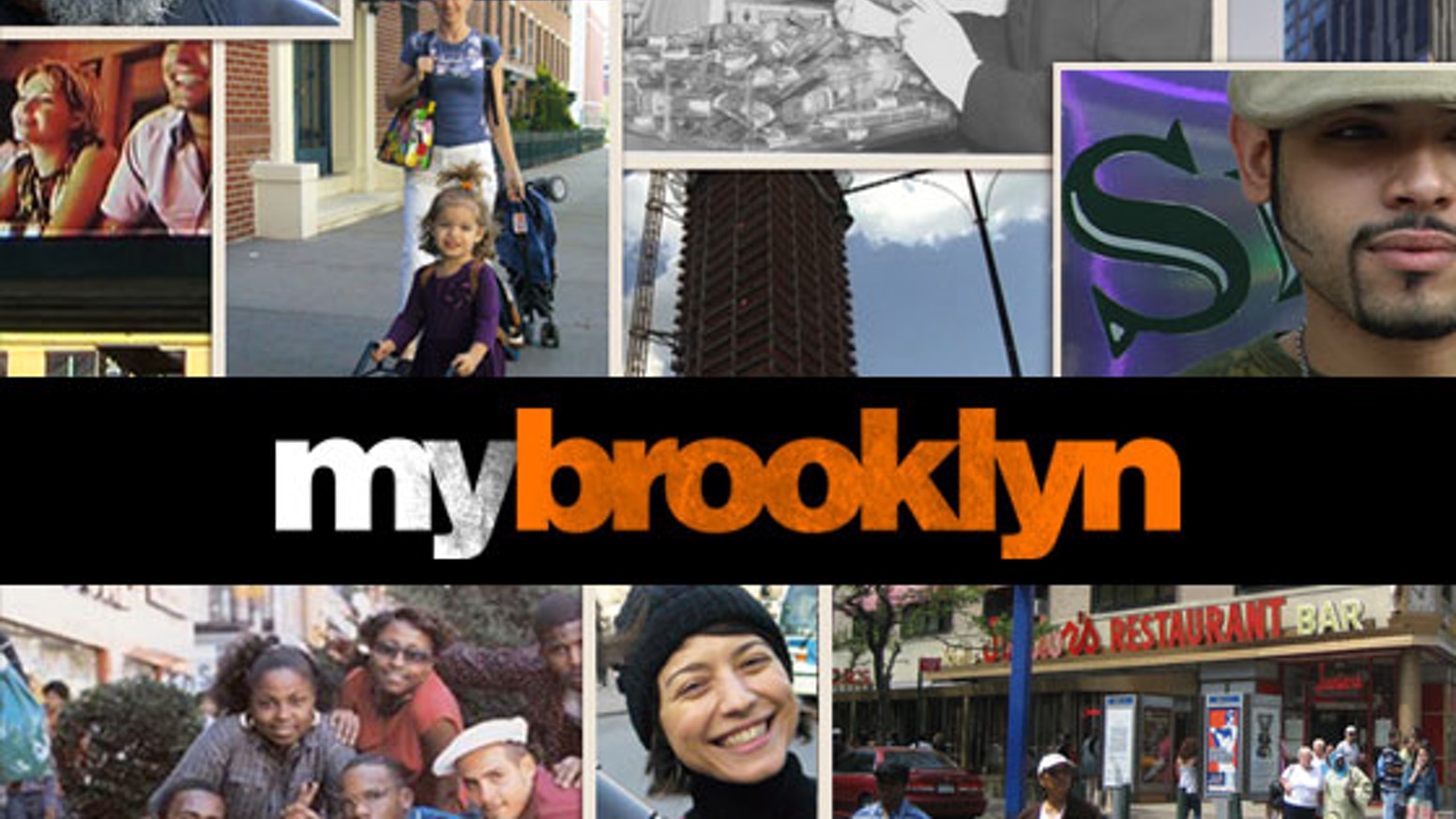
We’re pleased to pass along the news that MY BROOKLYN (recently screened as part of the MIT Urban Planning Film Series) will be featured in a special national PBS Broadcast on TV on Tuesday, January 14, 2014.

The screening is part of the PBS series America ReFramed, curated by the American Documentary team (the producers of POV). America ReFramed brings nonfiction independent films to the airwaves and cable, showcasing films that give viewers a “snapshot of the transforming American life—the guts, the glory, the grit of a new and changing America.”

Most of the screenings are on PBS World channels, but some regular stations (like WGBH — yay, Boston!) are showing it on their main channels too. To find out if you have PBS World via broadcast or cable, go to http://worldchannel.org/schedule/localize/ and enter your zipcode. The program you are looking for is “America ReFramed” and the date for My Brooklyn is Jan. 14th, 2014. (It’s not as complicated as it sounds, and there are some other amazing documentaries on the series so it’s worth knowing how to find it.)

My Brooklyn will also be streaming free from the America ReFramed site for a month. If you haven’t seen it yet, this is your chance; and if you have seen this amazingly personal gentrification narrative, please help us spread the word.

(please share! all is takes is one quick click...)

Gaining Ground at MIT: Wednesday, December 11, 2013

There will be a free screening of GAINING GROUND: BUILDING COMMUNITY ON DUDLEY STREET at MIT on Wednesday December 11th, 6:30pm, MIT AVT/Long Lounge, Room 7-341, 77 Massachusetts Ave. Food provided, Q&A to follow.

The film — a one-hour follow-up to the award-winning documentary Holding Ground (1996) — shows how one diverse Boston neighborhood has stemmed the tide against enormous odds. In the midst of the economic meltdown, GAINING GROUND explores the innovative, grassroots organizing efforts of the Dudley Street Neighborhood Initiative (DSNI) in Boston. DSNI was created 25 years ago when the community had been devastated by bank redlining, arson-for-profit and illegal dumping, and has become one of the preeminent models for community-based change. Over the course of two years, we watch a new generation of leaders working to prevent foreclosures and bring jobs and opportunities for young people to one of the city’s most diverse and economically challenged neighborhoods.

This screening is sponsored by the MIT Office of the Dean For Graduate Education.

(please share! all is takes is one quick click...)